
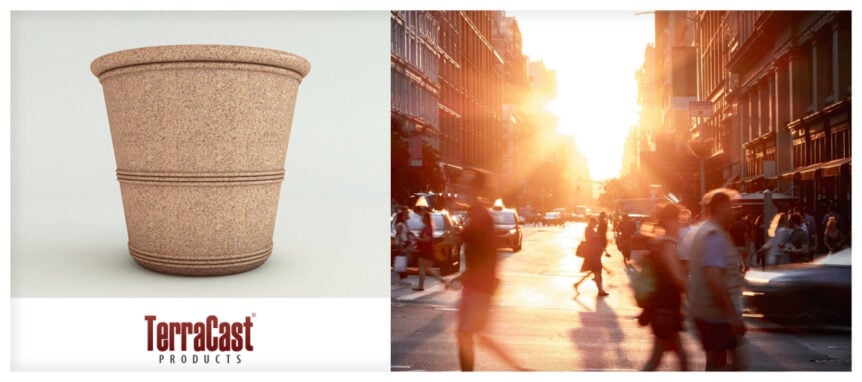
Large-scale streetscape installations require careful coordination, tight timelines, and efficient use of labor. Whether a city is revitalizing a downtown corridor, installing protected bike lanes, upgrading pedestrian plazas, or developing rooftop amenity spaces, logistics often determine how smoothly a project progresses. While durability and appearance are important, the physical weight of site furnishings can significantly impact installation efficiency. Lightweight materials offer a practical advantage by simplifying staging, reducing equipment needs, and accelerating deployment across expansive urban environments.
Streetscape projects rarely occur in controlled environments. Crews often work within active traffic zones, busy pedestrian areas, and phased construction schedules. Heavy materials can slow progress, require specialized lifting equipment, and increase labor demands. By contrast, lightweight site furnishings streamline installation while still delivering the durability required for long-term public use.
Reducing Equipment and Labor Requirements
Heavy concrete or stone elements typically require forklifts, cranes, or additional crew members to move and position them safely. This adds complexity to job sites and can increase both cost and risk. Lightweight resin materials can often be maneuvered and positioned with smaller crews and without heavy machinery.
Reducing reliance on large equipment simplifies logistics, particularly in dense urban areas where space is limited. Crews can transport furnishings more efficiently, reposition elements as needed, and maintain tighter installation schedules. This flexibility is especially valuable when working within traffic control zones or during overnight construction windows.
Improving Staging and Phased Deployment
Large-scale streetscape projects are often implemented in phases due to funding cycles or infrastructure constraints. Lightweight materials make phased deployment more manageable by allowing elements to be staged and installed incrementally. Planters and site furnishings can be delivered, stored, and placed with minimal disruption to surrounding activity.
In projects such as protected bike lanes or pedestrian expansions, temporary layouts may be tested before permanent configurations are finalized. Lightweight furnishings allow for easier adjustments during these pilot phases. Once placement is confirmed, elements can remain in position or be ballasted to provide additional stability.
This adaptability supports responsive urban design while maintaining long-term durability.
Advantages for Rooftop Gardens and Elevated Spaces
Lightweight materials are particularly valuable in rooftop gardens, terraces, and podium-level amenity spaces. Structural load capacity is a primary concern in elevated installations, and heavy concrete planters can quickly consume allowable weight limits before soil and plantings are even added.
Resin planters reduce dead load during transport and installation, making it easier to move materials through elevators, stairwells, or service corridors. Once positioned and filled with soil, they provide the necessary stability for plant growth without placing excessive strain on the building structure.
For architects and developers designing mixed-use buildings or residential towers, this balance of reduced installation weight and long-term durability makes lightweight materials an efficient solution for elevated landscapes. It allows rooftop spaces to be programmed confidently without unnecessary structural burden.
Balancing Mobility and Stability
One of the key advantages of lightweight resin planters is their dual functionality. During transport and installation, they are easy to move and position. Once installed and filled with soil or ballast, they gain significant weight and stability. This balance allows crews to benefit from efficient handling during installation while ensuring dependable performance once in use.
For streetscapes incorporating planter buffers, pedestrian zones, plaza seating areas, or rooftop gardens, this combination of mobility and stability supports both safety and practicality.
Minimizing Site Disruption
Urban installation projects must account for surrounding businesses, residents, and daily traffic patterns. The longer a street or property remains under construction, the greater the disruption to the community. Lightweight materials help reduce installation time by simplifying transport and placement.
Shorter installation windows mean fewer lane closures, reduced equipment staging, and less noise associated with heavy machinery. This efficiency can improve public perception of infrastructure projects and help cities and developers complete improvements with minimal inconvenience.
A Smarter Approach to Streetscape and Rooftop Installations
Efficiency is a critical factor in large-scale urban projects, whether at street level or elevated above it. Lightweight materials simplify logistics, reduce labor demands, and support phased implementation without sacrificing durability. From protected bike lanes to rooftop gardens, they provide flexibility during installation and stability in long-term use.
TerraCast® resin planters and site furnishings offer this balance of installation efficiency and dependable performance. Made in the USA and engineered for high-traffic and elevated environments, they help streamline projects from staging to final placement. To explore how lightweight materials can support your next streetscape or rooftop installation, you can connect with the TerraCast® team.