
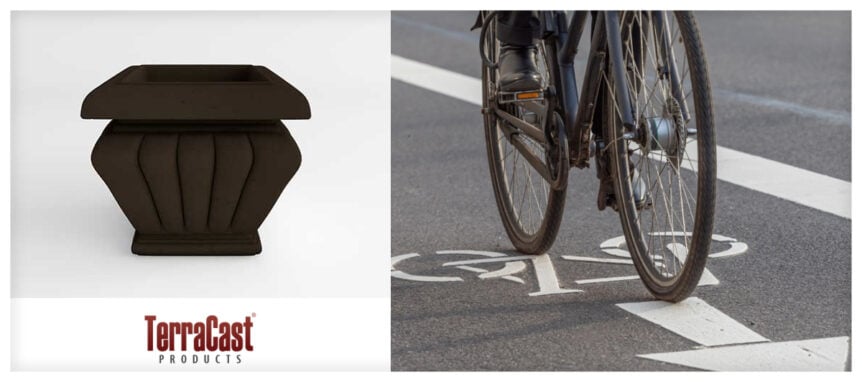
As cities continue to invest in bike friendly infrastructure, safety remains a central concern in bike lane design. While painted lines and signage help define space, they offer limited physical protection for cyclists traveling alongside vehicle traffic. For many municipalities and planners, the goal has shifted toward creating bike lanes that feel safer, more comfortable, and better integrated into the streetscape. Planters used as protective buffers have become an effective design strategy for achieving this balance, offering visual separation, space definition, and added protection without introducing rigid barriers.
Bike lanes that feel exposed often discourage use, even when they are technically well planned. Physical separation helps cyclists feel more secure and encourages broader adoption of cycling as a mode of transportation. Planters provide a practical solution by introducing a clear boundary between bikes and vehicles while enhancing the overall appearance of the street.
Why Physical Separation Improves Bike Lane Safety
Cyclists are most vulnerable when riding close to moving traffic. Without a physical buffer, even a narrow bike lane can feel unsafe due to passing vehicles, opening doors, and drifting cars. Physical separation helps reduce these risks by increasing the distance between cyclists and traffic lanes.
Planters create a visible and tangible buffer that reinforces the intended use of space. Unlike paint alone, they signal to drivers that the bike lane is a protected area. This clarity helps improve driver behavior while giving cyclists greater confidence as they move through busy corridors.
Planters as Buffers, Not Impact Barriers
It is important to distinguish the role planters play in bike lane design. Planters are not crash rated barriers and should not be expected to stop vehicles. Their value lies in visual separation, space definition, and deterrence rather than impact resistance. When placed correctly, planters discourage encroachment into bike lanes and reduce the likelihood of vehicles drifting into cyclist space.
This approach aligns with modern street design principles that prioritize layered safety strategies. Planters work alongside curbs, striping, signage, and traffic calming measures to create safer environments without relying on a single solution.
Enhancing Comfort and Encouraging Ridership
Perceived safety plays a major role in whether people choose to ride. Bike lanes that feel protected are more likely to be used by riders of all ages and experience levels. Planters help create a sense of enclosure and separation that reduces stress for cyclists, particularly in high traffic areas.
In addition to improving comfort, planters contribute to a more inviting streetscape. Greenery softens the urban environment and adds visual interest, making bike corridors more pleasant for cyclists and pedestrians alike. This dual benefit supports broader urban goals related to livability and active transportation.
Placement and Design Considerations
Successful use of planters as bike lane buffers depends on thoughtful placement. Spacing must allow for clear sightlines at intersections and driveways, ensuring visibility between cyclists and drivers. Planters should be positioned to maintain consistent separation while avoiding obstructions to pedestrian crossings and accessibility routes.
Material selection also matters. Planters used in street environments must withstand weather exposure, irrigation, and potential contact from vehicles or maintenance equipment. Durable materials that resist moisture and corrosion help ensure the planters continue to function as intended over time without frequent replacement.
Supporting Cohesive Streetscape Design
Beyond safety, planters used as bike lane buffers contribute to cohesive streetscape design. When coordinated with other site furnishings such as benches, lighting elements, and trash receptacles, they help unify the street visually. This consistency reinforces the idea that bike lanes are an integral part of the public realm, not an afterthought added to existing roadways.
In large or phased projects, consistent planter design allows future expansions or modifications to blend seamlessly with existing infrastructure. This predictability supports long term planning and helps maintain design integrity as cities evolve.
A Practical Solution for Urban Streets
Using planters as protective buffers offers municipalities a flexible and visually appealing way to improve bike lane safety. They can be adapted to a wide range of street widths and traffic conditions, making them suitable for both downtown corridors and neighborhood routes. Their presence helps clarify space, reduce conflicts, and create streets that feel safer for everyone.
TerraCast® resin planters are well suited for this application, offering durable, Made in the USA options that perform reliably in demanding street environments. Designed to withstand moisture, UV exposure, and daily wear, they support long term use while contributing to attractive, functional bike lane design. To explore how planters can be incorporated into safer bike lane projects, you can connect with the TerraCast® team.