
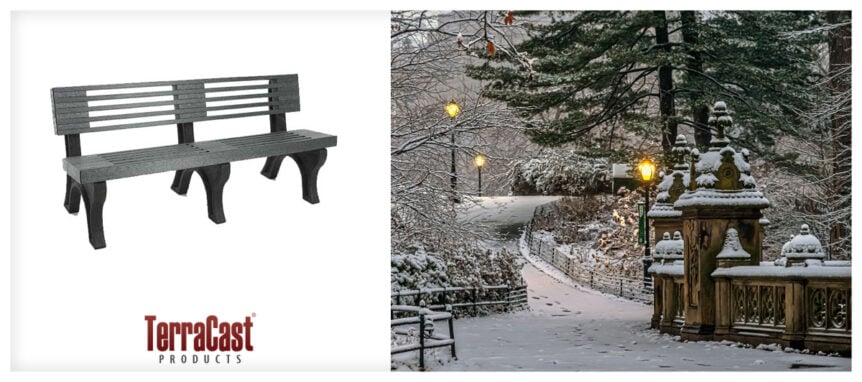
In northern regions and high elevation environments, freeze-thaw cycles are one of the most destructive forces affecting outdoor infrastructure. Water penetrates porous materials, freezes as temperatures drop, expands, and then thaws again, repeating the process dozens of times each season. Over time, this cycle leads to cracking, surface spalling, structural weakening, and premature replacement. For municipalities, campuses, and commercial developments operating in these climates, engineering site furnishings that can withstand freeze-thaw conditions is critical to long-term performance and cost control.
Too often, outdoor furnishings are selected primarily for appearance or upfront cost. While aesthetics matter, material behavior in extreme weather plays a far greater role in lifecycle value. When planters, benches, and streetscape elements begin to crack or deteriorate after just a few winters, maintenance budgets increase and visual consistency suffers. Careful material selection during the specification phase can prevent these issues before they begin.
Understanding the Freeze-Thaw Problem
The freeze-thaw process begins when moisture enters small pores or hairline cracks in a material. As temperatures fall below freezing, the trapped water expands. This expansion creates internal pressure that widens cracks and weakens the structure. When the ice melts, additional moisture can seep deeper into the material, repeating the cycle.
Concrete is particularly vulnerable to this process if not properly sealed and maintained. Over time, spider cracking and surface flaking can develop, especially in regions with heavy snowfall and frequent temperature swings. Fiberglass can also experience surface cracking and degradation when exposed to extreme temperature variation and prolonged moisture.
In high traffic public spaces, these issues are more than cosmetic. Cracked planters and deteriorating furnishings can create safety concerns, lead to plant instability, and require disruptive repairs.
Why Non-Porous Materials Perform Better
Materials that do not absorb moisture offer a significant advantage in freeze-thaw climates. Resin based site furnishings are non-porous, which means water cannot penetrate the material and freeze internally. Without moisture absorption, the expansion that causes cracking and structural damage simply does not occur.
This stability allows resin planters and furnishings to maintain their structural integrity season after season. They do not expand and contract in the same way as porous materials, reducing the risk of long-term deterioration. For engineers and planners, this predictable performance simplifies specification and reduces uncertainty in harsh climates.
Maintenance and Lifecycle Considerations
Freeze-thaw damage often leads to higher maintenance demands. Sealing, patching, and repainting become recurring tasks for materials that degrade under seasonal stress. Over time, these maintenance cycles add to overall project costs and disrupt public use of the space.
Engineering materials that inherently resist freeze-thaw damage minimizes these recurring expenses. Resin furnishings require no sealing to prevent moisture absorption, and their color-through construction eliminates peeling or flaking finishes. This reduces both labor and material costs associated with seasonal repairs.
Lifecycle planning is especially important for municipalities managing large streetscape networks or campus environments. Selecting materials that perform reliably across multiple winters supports long-term budgeting and reduces the frequency of large-scale replacement projects.
Supporting Structural Stability in Public Spaces
In freeze-thaw climates, soil movement and shifting can also impact planter stability. As ground moisture freezes and thaws, expansion and contraction can affect surrounding materials. Durable, stable planters help maintain consistent positioning and reduce the risk of structural compromise.
Resin planters remain stable in fluctuating temperatures and do not become brittle in cold conditions. Their ability to withstand repeated seasonal changes supports reliable use in plazas, pedestrian corridors, transportation hubs, and campus settings where durability is essential.
Aesthetic Consistency Through Harsh Seasons
Beyond structural concerns, freeze-thaw cycles can affect surface appearance. Cracking, spalling, and discoloration quickly diminish the visual quality of a streetscape. For revitalized downtown districts and carefully designed campuses, this deterioration undermines the original design intent.
Resin materials retain their finish and color even after repeated winter exposure. UV protection supports color stability year-round, while the non-porous surface resists staining and surface breakdown. This consistency helps public spaces maintain a clean and professional appearance through every season.
Engineering for Reliable Cold-Climate Performance
Engineering site furnishings for freeze-thaw climates requires more than selecting an attractive form. It demands materials that are able to resist moisture penetration, temperature fluctuation, and seasonal stress. By prioritizing non-porous construction and long-term durability, planners and engineers can reduce maintenance demands while protecting the integrity of their projects.
TerraCast® resin site furnishings are designed to perform reliably in harsh winter environments, offering Made in the USA solutions that resist cracking, moisture absorption, and surface deterioration. For municipalities, architects, and engineers seeking dependable cold-climate performance, selecting the right material from the start makes all the difference. To explore specification details or request documentation for your next project, you can connect with the TerraCast® team.