
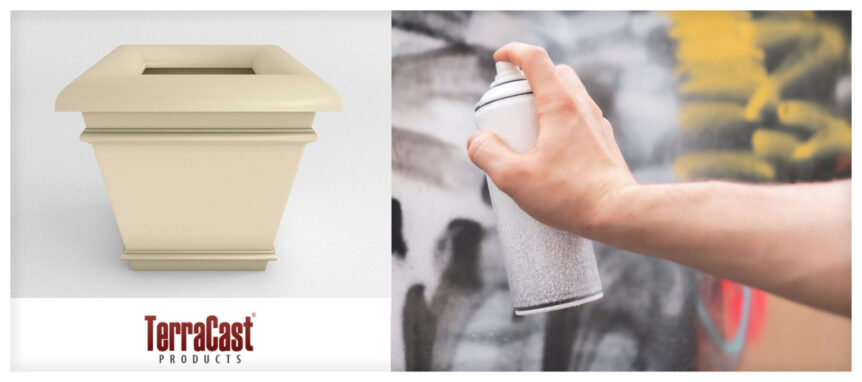
Graffiti is a persistent challenge in urban environments. From downtown corridors and transit stations to public plazas and parks, spray paint and marker tagging can quickly undermine the appearance of newly installed infrastructure. For municipalities and property managers, the issue is not only aesthetic but also financial. Repeated cleaning, repainting, and replacement of damaged surfaces can strain maintenance budgets and divert resources from other priorities. Selecting non-porous materials for site furnishings is one of the most effective ways to reduce graffiti-related maintenance over the long term.
Traditional porous materials such as unfinished concrete or certain coated surfaces absorb paint and ink into their surface. Once graffiti penetrates these materials, removal becomes difficult and often requires aggressive cleaning methods that can damage the finish. Over time, repeated cleaning can degrade the surface, leaving furnishings looking worn even after graffiti has been removed. In contrast, non-porous materials prevent paint from penetrating below the surface, making removal significantly easier and less destructive.
Understanding Why Porosity Matters
Porosity refers to the presence of tiny openings or voids within a material. When spray paint or marker ink is applied to a porous surface, it seeps into these openings and bonds below the surface layer. Even after surface cleaning, pigment can remain trapped, leading to ghosting or permanent staining.
Non-porous materials do not allow liquids to penetrate. Graffiti remains on the outer surface, which means it can typically be removed with standard cleaning agents without the need for harsh abrasives or repainting. This simple difference in material structure has a significant impact on long-term maintenance strategies.
Reducing Cleaning Time and Labor Costs
Maintenance crews often face tight schedules and limited resources. When graffiti removal requires sanding, repainting, or chemical stripping, the time and cost associated with each incident increase substantially. In high-traffic public spaces, frequent tagging can turn into an ongoing cycle of repair.
Non-porous site furnishings streamline this process. Because paint does not bond deeply to the material, removal is faster and less labor-intensive. Crews can restore surfaces without compromising the integrity of the finish, reducing downtime and keeping public areas looking maintained.
Over time, this efficiency translates into measurable cost savings. Lower labor hours, fewer materials used for touch-ups, and extended product lifespan all contribute to reduced overall maintenance expenses.
Preserving Appearance in High-Visibility Areas
Public perception matters in municipal and commercial environments. Graffiti that lingers on benches, planters, and other site furnishings can give the impression of neglect, even when the broader space is well maintained. Quick and effective removal helps preserve a sense of order and care.
Non-porous materials support consistent appearance by resisting staining and surface damage. Because the finish is not repeatedly stripped or repainted, furnishings maintain their original look longer. This is especially important in revitalized downtown districts, transportation hubs, and pedestrian plazas where visual quality is part of the community’s identity.
Color-through resin construction further enhances durability. Without surface coatings that can peel or chip, there is no finish to compromise during cleaning. The material itself retains its color and structure, even after repeated maintenance cycles.
Supporting Long-Term Infrastructure Planning
Municipal planning increasingly emphasizes lifecycle performance rather than initial cost alone. Materials that reduce recurring maintenance needs align with long-term budgeting and infrastructure goals. By selecting non-porous site furnishings, planners can proactively address vandalism concerns without relying solely on reactive maintenance strategies.
In areas where graffiti is common, non-porous planters and furnishings serve as a practical deterrent. When tagging can be removed quickly and cleanly, the incentive for repeated vandalism may decrease. While no material eliminates graffiti entirely, easier removal helps minimize its impact.
A Smarter Approach to Urban Durability
Durable, non-porous materials provide a clear advantage in public environments where graffiti is an ongoing concern. By preventing paint from penetrating surfaces, they simplify maintenance, preserve appearance, and reduce long-term costs. This performance-driven approach supports cleaner, more resilient public spaces without sacrificing design flexibility.
TerraCast® resin site furnishings are engineered with non-porous construction that resists moisture, staining, and graffiti absorption. Made in the USA and designed for high-traffic urban environments, they help municipalities and property managers maintain attractive public spaces with less maintenance burden. To learn more about incorporating durable, graffiti-resistant materials into your next project, you can connect with the TerraCast® team.