
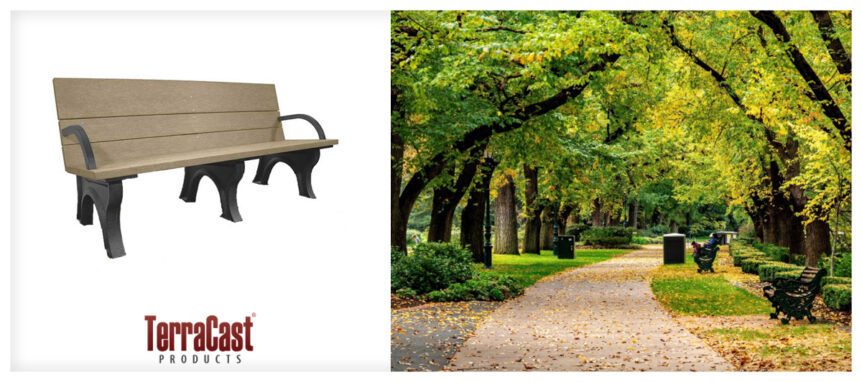
Public spaces are designed to serve communities for years, often decades, while maintaining safety, functionality, and visual appeal. From streetscapes and plazas to campuses and transportation corridors, these environments experience constant exposure to weather, foot traffic, and daily use. While design plays an important role in shaping these spaces, material selection ultimately determines how well they perform over time.
Choosing materials based solely on initial appearance or cost can lead to long-term challenges. Surfaces that crack, fade, or deteriorate quickly require ongoing maintenance and replacement, which can disrupt public use and increase lifecycle costs. For municipalities, developers, and planners, selecting materials that hold up under real-world conditions is essential to creating durable and sustainable public environments.
The Impact of Environmental Exposure
Outdoor site furnishings are exposed to a wide range of environmental conditions, including moisture, UV radiation, temperature fluctuations, and pollutants. Materials that absorb water or are sensitive to temperature changes can experience cracking, expansion, or surface breakdown over time.
In regions with freeze-thaw cycles, moisture penetration can be especially damaging. As water freezes and expands within porous materials, it creates internal pressure that leads to cracking and long-term structural degradation. In coastal or high-humidity environments, salt exposure and constant moisture can accelerate corrosion and surface wear.
Selecting materials that resist these environmental factors helps ensure that public spaces remain functional and visually consistent across seasons.
Durability in High-Traffic Environments
Public spaces are subject to continuous use, from pedestrian traffic to maintenance activity. Benches, planters, and other site elements must withstand impact, shifting loads, and everyday wear without compromising their structure or appearance.
Materials that chip, crack, or degrade under repeated use can quickly become safety concerns or require frequent repair. Durable materials that maintain their integrity under stress are essential for high-traffic environments such as downtown districts, transit hubs, and public parks.
Consistency in performance is equally important. When materials wear unevenly, the overall appearance of the space can become fragmented, detracting from the original design.
Maintenance and Lifecycle Performance
Maintenance requirements are a key consideration in material selection. Some materials require sealing, repainting, or surface treatments to maintain their appearance and performance. Over time, these maintenance cycles add to operational costs and can disrupt public access.
Non-porous materials offer an advantage by resisting moisture absorption and surface staining. This makes cleaning easier and reduces the need for protective coatings or repeated treatments. Color-through construction further supports long-term performance by eliminating the risk of peeling or flaking finishes.
For municipalities managing large networks of public spaces, reducing maintenance demands can lead to significant cost savings over the life of the project.
Balancing Aesthetics with Performance
Public spaces must be both functional and visually appealing. Materials should support the intended design while maintaining their appearance over time. Fading, discoloration, and surface deterioration can quickly diminish the impact of a well-designed space.
Materials that retain color and finish under prolonged UV exposure help preserve the visual integrity of the environment. This is particularly important in high-visibility areas such as downtown corridors, waterfronts, and civic spaces.
Consistency across site furnishings also contributes to a cohesive design. When materials perform similarly and age at the same rate, the space maintains a unified appearance rather than becoming a mix of new and deteriorated elements.
The Advantage of Resin Materials in Public Spaces
Resin-based site furnishings are increasingly used in public spaces because they address many of the challenges associated with traditional materials. Their non-porous construction prevents moisture absorption, reducing the risk of cracking and corrosion. They also resist UV damage, helping maintain color consistency over time.
In addition to durability, resin materials offer flexibility in design and manufacturing. This allows for consistent finishes across large projects and supports custom solutions when needed. Because resin furnishings are Made in the USA, production can be managed domestically, helping maintain reliable timelines and consistent quality.
Building Public Spaces That Last
Material selection is one of the most important decisions in any public space project. By prioritizing durability, low maintenance, and consistent performance, planners and developers can create environments that remain functional and attractive for years.
Selecting materials that hold up under real-world conditions reduces long-term costs, minimizes disruptions, and supports sustainable infrastructure planning. With the right approach, public spaces can continue to serve their communities without compromising on design or performance.
TerraCast® resin site furnishings are designed to meet the demands of modern public spaces, offering durable, Made in the USA solutions that resist moisture, UV exposure, and daily wear. To learn more about material options for your next project, you can connect with the TerraCast® team here.