
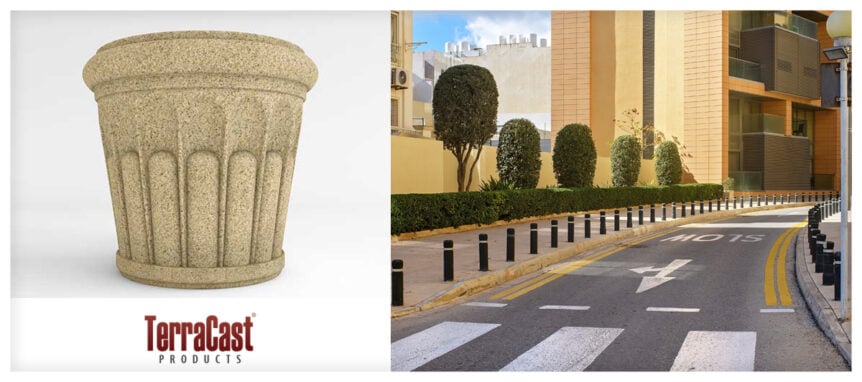
Well-designed streetscapes do more than improve the appearance of a community. They create welcoming public spaces, support local businesses, encourage pedestrian activity, and contribute to the long-term value of neighborhoods. While the initial investment in streetscape improvements is important, the ongoing cost of maintaining those improvements often has an even greater impact on municipal budgets over time.
For cities, developers, campuses, and commercial property owners, reducing maintenance costs begins with thoughtful planning. Selecting durable materials, designing for long-term performance, and choosing products that are easy to maintain can significantly lower lifecycle expenses while helping public spaces remain attractive for years to come.
Choose Durable Materials from the Start
Material selection is one of the biggest factors affecting long-term maintenance costs. Streetscape elements are constantly exposed to sunlight, rain, temperature changes, landscaping equipment, pedestrian traffic, and vehicle activity. Materials that deteriorate quickly often require more frequent repairs or replacement.
Selecting products that resist moisture, corrosion, fading, and impact damage helps reduce ongoing maintenance demands. Non-porous resin products, for example, do not rust and resist moisture absorption, making them well suited for many outdoor environments.
Investing in durable materials during the planning phase can reduce repair costs and extend the lifespan of streetscape improvements.
Think Beyond Initial Purchase Price
The least expensive product is not always the most cost-effective over its lifetime. Products that require repainting, refinishing, or frequent replacement may generate significantly higher maintenance expenses than higher-quality alternatives.
Evaluating lifecycle costs instead of focusing solely on upfront pricing allows project teams to make more informed decisions. Durable products that maintain their appearance and functionality for many years often provide better long-term value, even if the initial investment is higher.
Taking a lifecycle approach helps municipalities maximize the return on their infrastructure investments.
Select Products Designed for Easy Maintenance
Some streetscape products are specifically engineered to simplify maintenance tasks. Features that improve accessibility or reduce cleaning requirements can save both time and labor throughout the life of the installation.
For example, decorative clamshell light pole base covers provide convenient access to anchor bolts and mounting hardware during inspections or maintenance without disturbing the structural installation. Non-porous planter surfaces are also easier to clean and help resist staining from dirt, algae, and environmental pollutants.
Reducing the amount of time required for routine maintenance can result in meaningful savings across an entire streetscape project.
Use Consistent Streetscape Standards
Cities often complete streetscape improvements in multiple phases over several years. Using consistent product families and design standards across projects can simplify maintenance and replacement efforts.
When maintenance crews work with familiar products, repairs become more efficient and replacement components are easier to source. Standardizing site furnishings, decorative light pole base covers, and planters also helps preserve a cohesive appearance throughout the community while reducing inventory complexity.
Consistency supports both operational efficiency and long-term visual quality.
Plan for Local Environmental Conditions
Every region presents unique environmental challenges. Coastal communities may contend with salt air and humidity, while northern climates experience repeated freeze-thaw cycles. Areas with intense sunlight can accelerate fading and material degradation.
Selecting products designed for local conditions helps minimize weather-related maintenance issues. Materials that resist UV exposure, moisture, corrosion, and temperature fluctuations continue performing longer with fewer repairs.
Matching materials to the project environment is one of the simplest ways to reduce future maintenance demands.
Choose Products That Support Future Upgrades
Public infrastructure is constantly evolving. Lighting systems are modernized, landscaping is refreshed, and streetscape improvements are expanded as cities grow.
Selecting products that accommodate future upgrades helps reduce costs when changes become necessary. Decorative light pole base covers that can be removed for inspections or replacement, along with lightweight planters that are easier to relocate, provide greater flexibility throughout the life of the streetscape.
Planning for future improvements today can help avoid unnecessary labor and replacement costs tomorrow.
Invest in Long-Term Performance
Reducing streetscape maintenance costs is about making informed decisions that support decades of performance rather than focusing solely on short-term savings. Durable materials, consistent design standards, and products engineered for easy maintenance help communities protect their investment while maintaining attractive public spaces.
TerraCast® resin planters, decorative light pole base covers, and site furnishings are Made in the USA and engineered for long-term durability in demanding outdoor environments. Designed to resist moisture, corrosion, UV exposure, and everyday wear, they help municipalities, developers, and property owners create streetscapes that remain beautiful while reducing ongoing maintenance costs. To learn more about TerraCast® streetscape solutions, you can connect with the TerraCast® team.