
Not every part of a city fits neatly into the category of sidewalk, street, park, or plaza. Between these defined spaces are transitional areas, such as wide sidewalk edges, spaces near parking lots, building setbacks, areas surrounding transit stops, and portions of pavement left behind after a street redesign. Without thoughtful planning, these areas can feel disconnected or simply go unused.
Streetscape design provides an opportunity to turn transitional spaces into functional parts of the public environment. Through strategic landscaping, planters, seating, and other site furnishings, municipalities and developers can give overlooked areas a clearer purpose while improving the overall appearance and usability of a district.
Recognizing the Potential of Overlooked Spaces
Transitional areas are often created because urban infrastructure changes over time. A street may be narrowed, parking may be reconfigured, a building may sit farther from the sidewalk than its neighbors, or pedestrian improvements may leave additional paved space available.
Individually, these areas may seem too small to justify a major construction project. Collectively, however, they can represent valuable opportunities to improve a neighborhood.
A relatively small space might accommodate landscaping and seating, while a larger paved area could become an extension of a plaza or gathering space. The goal is not necessarily to completely rebuild the site, but to identify how existing space can contribute more effectively to the surrounding environment.
Using Planters to Give Spaces Definition
One of the challenges with transitional spaces is that people may not immediately understand how they are intended to be used. An open paved area without clear boundaries can simply look like leftover pavement.
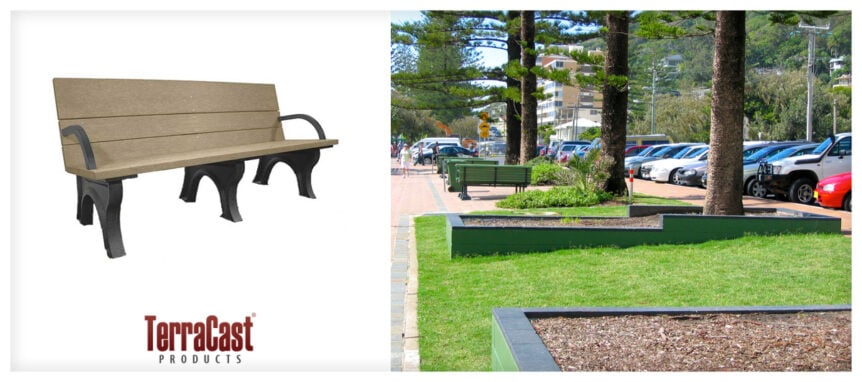
Large planters can help establish those boundaries while adding greenery and visual interest. Their placement can help distinguish pedestrian areas from surrounding circulation routes, frame seating areas, or establish an edge around a small gathering space.
Planters can also soften environments dominated by concrete and pavement. Introducing trees, shrubs, flowers, and other vegetation creates a more welcoming transition between buildings, sidewalks, streets, and public gathering areas.
Creating Places Where People Want to Spend Time
A transitional area becomes more valuable when it offers a reason for people to use it rather than simply pass through it.
Adding seating can transform an overlooked corner into a place where pedestrians can rest, employees can take a break, or visitors can meet before continuing through a downtown district. When seating is combined with landscaping, the space can begin to feel like an intentional destination rather than an unused gap between other areas.
These improvements do not necessarily require creating a full-scale park. Even modest streetscape additions can make smaller spaces more comfortable and useful.
Supporting Pedestrian-Friendly Environments
Transitional spaces can also play an important role in improving the pedestrian experience. Busy commercial districts often contain points where sidewalks, parking areas, building entrances, and vehicle circulation intersect. Clear visual organization can make these environments easier to understand.
Planters and site furnishings can help reinforce pedestrian routes and distinguish areas intended for gathering or seating. They can also help create natural transitions between different portions of a streetscape without relying entirely on permanent walls or extensive construction.
It is important to distinguish visual and spatial separation from vehicle protection. Decorative planters should not be treated as crash-rated barriers unless they have been specifically designed and tested for that purpose.
Maintaining Flexibility as Needs Change
One advantage of using streetscape elements to activate transitional spaces is the ability to adjust the design later.
Community needs can change. A space that initially serves as a small seating area might eventually become part of an outdoor dining zone, seasonal market, expanded pedestrian area, or community event. Movable planters and furnishings provide more flexibility than permanently constructed features.
Resin planters can be particularly useful for this type of application because they are lightweight compared with many traditional planter materials when empty. This can simplify initial installation and future repositioning. Once placed and filled, they become substantial landscape features.
Choosing Materials for Demanding Public Environments
Products placed in transitional spaces still face the same environmental demands as other streetscape features. They may be exposed to intense sunlight, rain, temperature changes, pedestrian traffic, landscaping activity, and other everyday conditions.
Material selection therefore plays an important role in long-term performance. TerraCast® planters are manufactured from rotationally molded LLDPE resin, a non-porous material that resists moisture and corrosion. Resin construction also avoids many of the concerns associated with materials that can rust, chip, or deteriorate after prolonged outdoor exposure.
Durable products help cities maintain these improved spaces without creating unnecessary long-term maintenance demands.
Finding New Value in Existing Urban Space
Improving a city does not always require finding more land or undertaking a major redevelopment project. Sometimes the opportunity already exists in spaces that have simply never been given a clear purpose.
Thoughtful streetscape design can transform these transitional areas into landscaped seating zones, pedestrian spaces, gathering points, or attractive connections between larger destinations. By combining greenery, site furnishings, and flexible layouts, municipalities and developers can get more value from space that might otherwise remain overlooked.
TerraCast® manufactures durable resin planters and site furnishings in the USA for commercial, municipal, and public-space applications. With a variety of sizes and styles available, these products can help turn underused areas into more attractive and functional parts of the streetscape. To explore options for an upcoming project, contact the TerraCast® team.